Categories
iOS development iPhone Mobile News social shopping user experience UX

Mobile Links for week of November 25-30 2012

Android shopping traffic lags behind iOS, despite the larger number of devices. GigaOm asks why:
Why are Android users less engaged than iOS users?

Nice detailed graphs and links to several good stories on the topic. I do take issue slightly with the idea that “willingness to buy stuff == engagement”; everyone buys devices for different reasons. But if you are writing shopping apps or marketing your business on mobile devices, it’s important to understand the different types of users and the strategies that work best on each platform.

IDC: Developer Disinterest Could Kill RIM & Windows Phone Ya think? Out of all of the companies I’ve interviewed lately, only a couple are planning to put their apps on Windows Phone, and nobody is planning to support BlackBerry.

11 Apple iPads per hour vs. zero Microsoft Surface tablets Schadenfreude aside*, this is a significant indicator about what a misstep it has been for Microsoft to sidestep its OEMs.  They don’t have nearly the distribution network they need to go it alone.   Also, Surface exemplifies how badly MS has misread the tablet trend; it’s not about the hardware, its about reducing the computing experience to something that is quick and pleasurable.  Shoehorning desktop Windows onto a tablet barely capable of running it fails both tests.

*Actually, I’m not enjoying this at all,  I’m a Microsoft shareholder, and my investment has seen no growth, while my Apple stock has gone through the roof.  Steve Ballmer has got to go.

In BII MOBILE INSIGHTS: Mobile Technology May Define The Future Of Healthcare, PriceWaterhouse Coopers presents a video talking about how mobile is influencing healthcare.      The other links/reports on this page are pretty good, too.

Categories
user experience UX Web Design

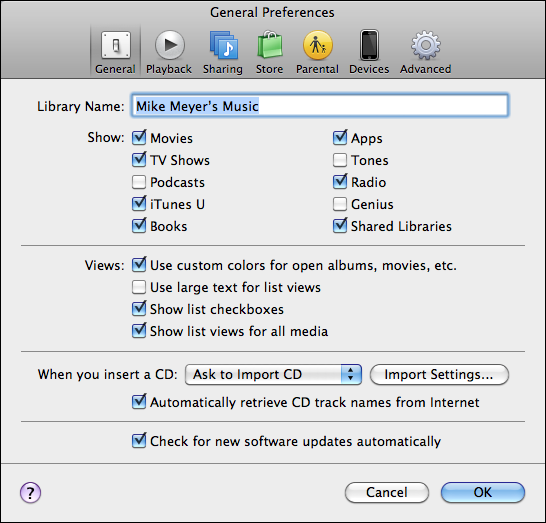
iTunes 11: First impressions

Very First impression: More pictures, Tinier fonts that cant be resized.

While the new font is fairly readable, the smaller size is a bit of an insult for my aging eyes. Not cool, and not changeable, as far as I can see.

At first, it looks like the navigation is very different, the sidebar that has been with us since iTunes 1 is gone, replaced by a ribbon which lets you choose content types and view a dropdown of your devices. Turns out that you can still turn on the sidebar, it’s an option in the View menu.

iTunes Match came up pretty quickly, and is no longer called out in the sidebar list. Device management features seem to be working better with my iPhone 5.

I’ve left my desktop with the old version and will post any interesting comparisons I find.

I have noticed some glitches in the way some of the screens load, where the HTML 5 layouts are either messed up or text fields are displaying with strings like “DI6.SortOrder.Featured” instead of the title “Featured”. I”m wondering if some instances of the servers are not syncd up. Apple runs iTunes on tens of thousands of servers, and restarting them for updates is not an instantaneous process.

Edit: Gruber has a pretty good summary of the new interface already.

Categories
Blog Internet Marketing Mobile News social media

Mobile Links for 21 June 2011

Mobile App Use Overtakes Web Use

Categories
Blog iOS development

WWDC 2012 Sell-Out – sign of platform health, or symptom of bigger issues?

It’s very disappointing that the WWDC announcement occurred the way it did. So far, my developer’s account still hasn’t even received an official announcement from Apple, and being on the West Coast, the conference was sold out before I woke up.

This is more of a problem for Apple than just a few disappointed developers in California, though. Lack of reliable information about iOS slows the adoption of new features, and the biggest value of WWDC is the hands-on labs. While user uptake of 5.0 is very high (over 80% of the install base), developers need time and information to absorb new features. The iOS announcements at WWDC are also largely under NDA, leaving developers no way to share information until the official release.

The model of holding one conference close to Cupertino and driving 1000 engineers to Moscone for a week is not sufficiently scalable for today’s developer demand. In the past, Apple has done some road shows where they send people to major cities to talk up their new technologies, but even that is an unreasonable amount of scarcity. The development forums and Apple’s current paid support structure are very hard to search and navigate, and the forums are very light on things like submission policies, acceptance, etc. The large media company I’m currently working for has dedicated Developer Relations support, and even they have issues getting answers; you can imagine what it’s like for smaller developers who don’t.

I think it’s high time for Apple to build and staff permanent dedicated Developer Relations Centers in key cities. These should be staffed with working software engineers (not just evangelists) who can provide detailed help with tools, libraries, and policies, and escalate tougher problems to Cupertino. These places could also be a great focal point for training classes and other services to developers.

Another way they could mitigate the information gap might be to provide developer services at key Apple Stores, with features like a regular schedule of talks, a showcase of apps developed by local developers, and a Developer’s Genius Bar to help navigate questions about the HIGs, content standards, and other policies. More importantly, it gives Apple a much better way to listen to the community and prioritize new features and policies. This is a very low-cost and low-risk way for Apple to do developer outreach.

Categories
Blog Esoterica

The art of Burning Man – 2011

If you’ve wondered why I go to Burning Man, perhaps this will answer your questions.

Where else do you see technology and industrial equipment bent to the purpose of art in such a harsh environment?

Categories
Blog

Facebook Messenger a disappointment on iPad

The new Facebook Messenger app looks like a nice streamlined UI to Facebook IM, one that uses location and push notifications to provide an alternative to both IM and texting.

However, they dropped the ball when it comes to the iPad. The app is built as an iPhone-only app, which means it appears on the iPad in a little window that you can pixel double up to full-screen size. Yuck.

One wonders why they didn’t at minimum build it as a Universal app, which lets the UI scale up to full screen using the full resolution of the device. This takes literally 5 minutes to implement in Xcode. The ideal solution, however, would be to use the iPad split view, which would show your list of chat buddies on the left, and your conversation thread on the right. This is a bit more work to implement, but still easy to do for an iOS developer with any iPad experience.

Facebook seems to have the opinion that the proper way to use their service is through the iPad web browser, and that certainly works, but having the ability to take advantage of push notifications and all the other native goodies and access your conversations with a couple of pokes would be a better way to exploit the immediacy of the iPad interface.